The NanoNeuroOmics project aims to bridge the gap between brain pathophysiology and molecular changes in the blood, focusing on two of the most challenging central nervous system disorders: Alzheimer’s disease (AD) and Glioblastoma (GBM).

The NanoNeuroOmics project aims to bridge the gap between brain pathophysiology and molecular changes in the blood, focusing on two of the most challenging central nervous system disorders: Alzheimer’s disease (AD) and Glioblastoma (GBM).
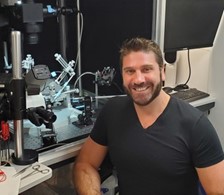
The team aims to bring this cutting-edge technology to preclinical stroke research to gain a better understanding of the mechanisms of SD initiation and their involvement in worsening stroke severity. This work will be a crucial first step in the maturity of this technology towards future clinical translation where they anticipate that it will greatly facilitate management of patients in the neuro-intensive care units.
Funding has been awarded through the dual-award PhD programme between the University of Melbourne and University of Manchester. The dual-award scheme brings together research teams between the two institutions with a PhD student assigned to each. This is a highly competitive scheme with just six dual awards (twelve students) made across both Universities in all disciplines. For our researchers to secure two of these awards is therefore a fantastic achievement.

Congratulations to our Brain Inflammation theme lead Professor David Brough, who has been awarded Researcher of the Year for the Faculty of Biology, Medicine and Health in The University of Manchester's Distinguished Achievement Awards 2021. The awards celebrate the...
Geoffrey Jefferson Brain Research Centre
Clinical Sciences Building
Northern Care Alliance
NHS Foundation Trust
Salford
M6 8FJ
Email: GJBRC@manchester.ac.uk


Recent Comments