
Assessing changes in an inflammation signal in vestibular schwannoma
Researchers from our brain tumour theme are set to begin a new MRC-funded study into inflammation that drives tumour growth in vestibular schwannoma. This is a type of benign tumour that develops on the main nerve leading from the inner ear to the brain, affecting balance and hearing.
It’s the latest study in a decade of groundbreaking research into vestibular schwannoma (VS) by experts at Salford Royal, Northern Care Alliance and The University of Manchester.
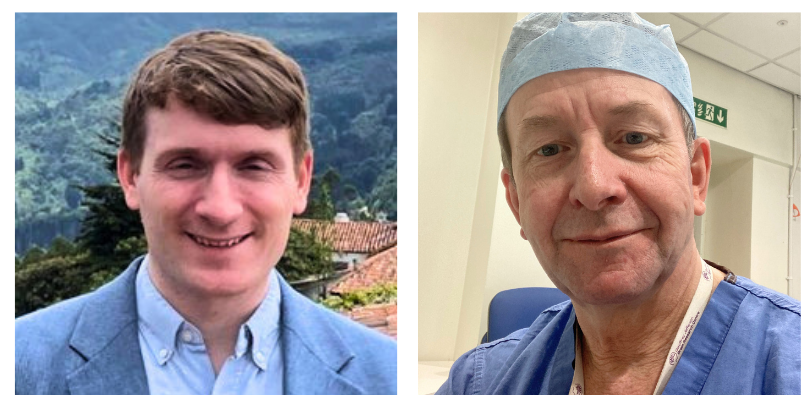
The study group is led by Mr Daniel Lewis, Mr Cathal Hannan and Professor Andrew King, and this study aims to identify the best tests or biomarkers that can evaluate whether targeting a chemical mediator of inflammation, interleukin-1 (IL-1), may have an effect within VS.
Ten patients who are planned to have surgery on a growing vestibular schwannoma at Salford will first have a detailed MRI scan and give blood samples. They will then have a daily injection under the skin of an established IL-1 targeting drug called anakinra for 14 days, before the scan and tests are repeated. The anti-inflammatory medication is widely used in other conditions and has a strong safety record.
Decade of research
The results of the scans and tests will then be compared with a control group of patients who do not receive anakinra to see if the treatment has an effect in VS.
Mr Lewis explained: “Vestibular schwannoma can have a major impact on patients’ quality of life, causing symptoms such as hearing loss, dizziness and facial numbness or pain. In the most serious cases, they can grow to compress the brainstem and block the flow of fluid around the brain, a condition called hydrocephalus.”
“The main treatments are surgery and radiotherapy to remove or shrink the tumours, but these have their own risks and complications so we are keen to identify treatments that can effectively reduce tumour growth. Our research in Manchester over the last nine years has greatly expanded knowledge about the key role inflammation plays VS. This important new study will add to that and brings us a crucial step closer to much needed drug treatments against these challenging tumours.”
The £75,000 MRC funding has been awarded to the study through the Translation Manchester Confidence for Translation (C4T) programme.
Address
Geoffrey Jefferson Brain Research Centre
Clinical Sciences Building
Northern Care Alliance
NHS Foundation Trust
Salford
M6 8FJ
Email: GJBRC@manchester.ac.uk
Connect with us


0 Comments